
HUDSON
BIOTECH
TB-500: Research Background, Clinical Context, and What the NCT07487363
Source-grounded trial analysis and peptide-supply context for sponsors, CROs, hospitals, investigators, and research procurement teams. It focuses on TB-500 for clinical research.
Why
This Page Exists??
NCT07487363 is a fictional ClinicalTrials.gov example, not a live TB-500 trial. Therefore.
This distinction matters because peptide-development trust depends on careful sourcing and precise language. It also requires a clear separation between exploratory science and verified clinical evidence.
What TB-500 Is
Public sources generally describe TB-500 as an acetylated thymosin beta-4 fragment, not the full peptide, FDA substance records. WADA prohibits TB-500 in sport.
FDA has raised safety concerns for thymosin beta-4 fragment LKKTETQ.
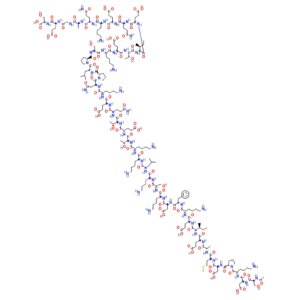
What the Official NCT07487363 Entry Says Right Now
As of April 8, 2026, ClinicalTrials.gov lists TBRIDGE-CV as a Phase 1/2 interventional study of TB-500 versus placebo. It also lists Hudson Biotech as sponsor and Peking University Shenzhen Hospital in China as the study site.

Current Research and Clinical Context
TB-500 literature focuses on analytics, metabolism, and anti-doping. In addition, a 2023 study found misbranded and adulterated online products.
Human studies involve full-length or recombinant thymosin beta-4, not TB-500.
Why Sponsor and Manufacturer Credibility Matter in Peptide Clinical Research
This is critical where hype exceeds documentation. Therefore, a credible supplier must support identity, purity, impurity review, stability, batch release, change control, and quality/regulatory documentation.
?
How Hudson Biotech Supports Peptide Clinical Programs
This is critical where hype exceeds documentation. Therefore, a credible supplier must support identity, purity, impurity review, stability, batch release, change control, and quality/regulatory documentation.
[CLIENT TO VERIFY]
GMP or phase-appropriate peptide API manufacturing.
[CLIENT TO VERIFY]
Analytical method development, identity confirmation, impurity profiling, and batch release testing.
[CLIENT TO VERIFY]
Stability studies, reference standards, and supporting documentation.
[CLIENT TO VERIFY]
Clinical-trial supply planning, packaging and label coordination, and tech transfer support.
FAQ:
Is NCT07487363 a live recruiting clinical trial?
The official record includes recruiting-style metadata. However, its summary states that the entry is fictional and example-only. In addition, ClinicalTrials.gov supporting materials confirm that example studies are fictional and used for illustration.
Why can a ClinicalTrials.gov record look active if it is fictional?
This is because example records can still resemble real study entries. In this case, visible fields such as sponsor, site, phase, conditions, and placebo-controlled design mirror a typical trial. However, the summary text takes precedence because it clearly states that the record is fictional and for illustrative purposes only.
Is TB-500 the same as thymosin beta 4?
Not exactly. TB-500 is typically described as a short, acetylated peptide fragment associated with thymosin beta 4. In contrast, full-length thymosin beta 4 is a 43–amino acid endogenous peptide with a broader body of biological research.
Does a GSRS or UNII listing mean FDA approval?
Correct. FDA’s GSRS and UNII resources note that a UNII assignment does not indicate regulatory review, approval, or endorsement. Therefore, a substance listing should not be presented as FDA approval.
Is there established human clinical evidence for TB-500?
Across the sources reviewed for this page, TB-500-specific literature focused mainly on analytical characterization, metabolic studies, and anti-doping research. In contrast, human clinical studies involved full-length or recombinant thymosin beta 4 rather than TB-500 itself.
Why does quality control matter so much in peptide programs?
This matters because peptide medicines may contain sequence-related impurities and other product- or process-related variants. In some cases, these variants can affect comparability and immunogenicity. Therefore, ICH Q7 guidance and broader peptide literature emphasize robust GMP systems, thorough impurity characterization, and complete documentation for development and manufacturing quality.
Why is TB-500 discussed in anti-doping materials?
The World Anti-Doping Agency (WADA) includes thymosin beta-4 and its derivatives, including TB-500, on its Prohibited List. In addition, WADA reference materials describe TB-500 as the peptide fragment N-Ac-LKKTETQ.
Can this page be used as medical, legal, or regulatory advice?
This page is intended as an educational, source-based overview for research and development audiences. However, it does not provide medical or legal advice. It also does not replace protocol-specific regulatory review.