
HUDSON
BIOTECH
Melanotan II and ClinicalTrials.gov Record NCT07437560
A compliance-aware overview of Melanotan II clinical trial context, including NCT07437560, for sponsors, CROs, hospitals, and research teams evaluating peptide manufacturing and, importantly, trial-supply readiness.
Summary
Organizations evaluating Melanotan II clinical trial opportunities look beyond basic compound information. Instead, they focus on scientific rationale, clinical-development context, regulatory status, and manufacturing support.
What Is Melanotan II?
Melanotan II is a synthetic cyclic heptapeptide with recognized chemical listings, including PubChem and FDA UNII identifiers. it has a defined chemical identity, Melanotan II clinical trials continue to evaluate its safety .


ClinicalTrials.gov Study NCT07437560 Overview
Public snippets for NCT07437560 describe Melanotan II with NB-UVB in the context of repigmentation for stable nonsegmental vitiligo.
Public records describe NCT07437560 as Melanotan II with NB-UVB for repigmentation in stable nonsegmental vitiligo. snippets list Hudson Biotech as sponsor with a last update of February 27, 2026.
NCT07437560 is described as a randomized Phase 2 study of MT-II with NB-UVB. mirror sources list recruiting status, a February 2, 2026 start date, and a China location.
Critical Caveat
ClinicalTrials.gov labels NCT07437560 as an example interventional record.
Why This Trial Matters
Even with caution, the concept remains relevant. Specifically, vitiligo research focuses on repigmentation, combination strategies, and durable response, with NB-UVB as a key modality.
A melanocortin-pathway peptide combined with NB-UVB is scientifically plausible. In addition, vitiligo research often explores NB-UVB with pigmentation-targeted therapies, which helps explain interest in Melanotan II alongside NCT07437560.
Scientific and Regulatory Context
FDA-approved ruxolitinib cream sets the benchmark for nonsegmental vitiligo.
Phototherapy remains central in nonsegmental vitiligo. any NB-UVB adjunct peptide is a clinical development, and approved therapy.
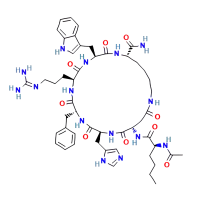
The European Medicines Agency 2025 synthetic-peptide guideline reinforces expectations for process development, characterization, specifications, and analytical control. it signals what sophisticated buyers expect even in U.S.-focused programs.
Hudson Biotech’s Capabilities
Hudson Biotech is positioned as a peptide manufacturing partner for clinical-trial and research use. Therefore, success depends on process control, documentation, and supply readiness—not the molecule alone.
This positioning is especially important in Melanotan II clinical trial supply and research settings. In these settings, sponsors and buyers require technical support for synthesis, purity, impurity profiling, stability, handling, and stage-appropriate documentation.
Hudson Biotech’s message is operational seriousness, not therapeutic promise. As a result, Melanotan II is positioned to support translational, hospital-led, and industry-sponsored peptide programs.
FAQ:
What is Melanotan II?
Melanotan II is a synthetic cyclic heptapeptide analog of alpha-melanotropin. It also appears in public chemical and regulatory databases and is discussed in investigational peptide research.
Is Melanotan II FDA approved?
No. Public FDA materials describe MII / Melanotan II as an unapproved new drug. In addition, they identify safety concerns related to compounded Melanotan II.
What does ClinicalTrials.gov study NCT07437560 describe?
Public eligibility text describes adults 18 years and older with obesity, or with overweight plus at least one weight-related comorbidity. However, it excludes people with type 1 or type 2 diabetes.
Is NCT07437560 a verified live clinical trial?
Not safely from public snippets alone. In addition, the accessible official snippet labels it as an example interventional study record, and ClinicalTrials.gov says example study records are fictional training materials.
Why is NB-UVB important in vitiligo research?
Recent reviews continue to describe NB-UVB as effective and widely recommended in nonsegmental vitiligo. Therefore, it appears repeatedly in vitiligo combination-study design.
What is the difference between Melanotan II and afamelanotide in clinical context?
They are not interchangeable. Public sources describe Melanotan II as a separate alpha-MSH analog, whereas afamelanotide has its own clinical and research pathway and has also been studied with NB-UVB in vitiligo.
What should sponsors ask a peptide manufacturer before sourcing material?
Ask about synthesis strategy, purification, identity and purity testing, impurity characterization, and stability. In addition, confirm the documentation package, shipping conditions, and change-control process.
What documents should a clinical-trial peptide supplier be ready to provide?
Buyers typically expect specifications, a certificate of analysis, analytical summaries, storage and shipping guidance, and, importantly, responses to vendor qualification or quality questionnaires.
Can a research peptide supplier automatically support clinical-trial material?
No. A general research supplier is not automatically a fit for trial material. Therefore, sponsors should evaluate whether the supplier can support the quality, documentation, and consistency appropriate to the study stage.
How should Hudson Biotech position Melanotan II content to stay compliant?
Use investigational, scientific, B2B language. In addition, avoid tanning, disease-cure, safety, approval, or sponsor claims that are not directly supported by source-level documentation.
Quality, Documentation, and Clinical-Trial Support
Buyers expect clear basics: synthesis, purification, identity confirmation, purity testing, impurity review, stability planning, and, importantly, controlled storage/distribution by program stage.
Documentation is critical: specs, CoA, analytical summaries, change control, storage/shipping guidance, and vendor-qualification responses.