
HUDSON
BIOTECH
GHK-Cu in NCT07437586: Trial Context, Research Background, and Clinical Development Considerations
Investigational GHK-Cu background for sponsors, CROs, hospitals, and research institutions reviewing NCT07437586, along with evidence and U.S. manufacturer considerations.
What the NCT07437586 Trial Is Evaluating
ClinicalTrials.gov describes NCT07437586 as a Phase 2 randomized, double-blind, vehicle-controlled study of topical GHK-Cu gel for acute skin wound healing. In addition, the Hudson Biotech-sponsored study involves 60 healthy adults in a split-wound punch-biopsy design.
The record lists GHK-Cu Gel 0.1% w/w as a once-daily topical investigational product for 14 days. In addition, it includes assessments of wound healing, re-epithelialization, pain, tolerability, infection, and 12-week scar quality using POSAS.
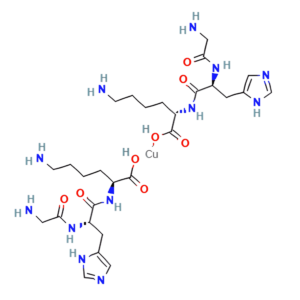
GHK-Cu: Investigational Background and Current Research
GHK-Cu is an investigational copper-peptide complex related to glycyl-L-histidyl-L-lysine. It may also appear as copper tripeptide, copper tripeptide-1, or prezatide copper. However, naming varies across cosmetic, research, and pharmaceutical contexts. Therefore, sponsor-facing content should define the material clearly and use one naming convention consistently.
Preclinical literature suggests that GHK-Cu may affect tissue repair, extracellular matrix remodeling, collagen-related pathways, oxidative stress, inflammation, and regenerative biology.
Some small topical or cosmetic studies report skin-related improvements.
- Investigational copper-peptide background
- Multiple naming conventions across contexts
- Preclinical support does not equal clinical proof
- Human evidence remains limited
- Skin or cosmetic findings should not be overstated as therapeutic outcomes
Clinical Development and Study Planning Considerations
GHK-Cu search results are often dominated by skincare, RUO, or direct-purchase pages. However, sponsor-facing content should use clinical-development language instead, including custom peptide synthesis, peptide API manufacturing, analytical characterization, scale-up, trial material supply, CDMO, and CMO.
Research-Grade GHK-Cu Often Signals
- Catalog-style listings
- Research-use-only positioning
- Limited procurement context
- Minimal trial documentation emphasis
Clinical-Trial Supply Language Signals
- Protocol-aware sourcing
- Study-stage planning
- Analytical characterization
- Documentation expectations
- Packaging and labeling needs
- Sponsor/CRO workflow support
Planning Questions Teams Should Clarify
Planning Questions Teams Should Clarify
01 Intended study phase and use case +
Define whether the material is for early research, preclinical work, formulation evaluation, or clinical-pathway supply planning.
02 Dosage form assumptions +
Confirm whether the expected format is topical, injectable, lyophilized, solution-based, or another study-specific presentation.
03 Comparator or vehicle requirements +
Identify whether placebo, vehicle, comparator, or matched control material is required for the study design.
04 Analytical and documentation expectations +
Define expected testing, certificate of analysis, identity confirmation, purity profile, impurity controls, and batch records.
05 Stability requirements +
Clarify storage conditions, retest periods, shipping conditions, and stability data needs for the intended workflow.
06 Packaging and labeling needs +
Confirm container format, labeling text, lot details, study identifiers, and site-facing handling requirements.
07 Site or depot distribution assumptions +
Determine whether material will move to a central depot, clinical site, research lab, or another controlled distribution point.
08 Target supply timeline +
Finally, align synthesis, testing, documentation, release, packaging, and shipping timelines with the expected study schedule.
Hudson Biotech Positioning
Hudson Biotech is a U.S.- peptide manufacturing partner for custom synthesis and clinical trial supply. In addition, it serves biotech sponsors, CROs, hospitals, research institutions, procurement teams, and principal investigators.
FAQ:
What is GHK-Cu?
GHK-Cu is a copper–peptide complex associated with the tripeptide glycyl-L-histidyl-L-lysine. It is also referred to as copper tripeptide, copper tripeptide-1, or prezatide copper. In the context of NCT07437586, however, it is being investigated as a topical gel.
What is NCT07437586 evaluating?
NCT07437586 is a Phase 2 interventional study assessing whether topical GHK-Cu gel can safely accelerate the healing of small, standardized acute skin wounds in healthy adults compared with a matching vehicle gel. Specifically, the study uses a randomized, double-blind, vehicle-controlled, split-wound design, with an estimated enrollment of 60 participants, once-daily dosing for 14 days, and follow-up assessments including wound healing and scar quality.
Is GHK-Cu investigational?
Yes. In this context, GHK-Cu is presented as an investigational peptide. Moreover, the official record classifies it as a Phase 2 study intervention, while current literature supports continued investigation rather than definitive therapeutic claims.
Is GHK-Cu the same as copper tripeptide-1?
These terms are commonly used within the same or closely related naming context for GHK-Cu. However, naming conventions may vary across cosmetic, research, and pharmaceutical development settings. Therefore, the exact material and specifications should be clearly defined in study and sourcing documentation.
What is the difference between research-grade GHK-Cu and clinical trial peptide supply?
Search results frequently present GHK-Cu as research-use-only or catalog material. In contrast, clinical trial peptide suppliers focus on custom synthesis, analytical characterization, scale-up, regulatory documentation, and structured study supply planning.
What should sponsors prepare before starting a technical discussion?
Sponsors should be prepared to define the exact material identity, intended study phase, dosage form, comparator strategy, analytical requirements, documentation needs, stability expectations, packaging and labeling considerations, and target timelines. Together, these elements are essential for an effective study planning discussion.
Short Compliance Disclaimer
GHK-Cu is presented as an investigational peptide for biotech, clinical research, and procurement audiences. In addition, it is relevant for organizations evaluating GHK-Cu manufacturer USA and sourcing considerations.