
HUDSON
BIOTECH
BPC 157: Clinical Research Context and NCT07437547 Overview
This page covers the BPC 157 peptide, key considerations from the publicly listed NCT07437547 clinical study, and, importantly, the evidence standards relevant to investigational peptide research.
peptide synthesis, purification, analytical characterization, and clinical-trial supply considerations for investigational research programs.
What BPC 157 Is
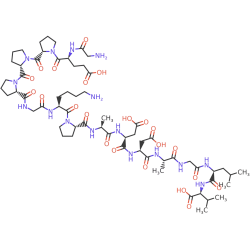
A 15–amino acid peptide is listed in the FDA UNII database and presented as investigational. Therefore, this distinction is important.
??
Trial Snapshot for NCT07437547
What the Public Study Listing Shows
Status:
Enrolling Phase 2 interventional study
Population:
The study includes an estimated 20 participants, ages 18 to 45, with MRI-confirmed acute grade II hamstring strain. Importantly, the trial does not include healthy volunteers.
esign:
The study uses a randomized, parallel-assignment, quadruple-blind, placebo-controlled design.
Treatment:
Subcutaneous BPC 157 or matching placebo is administered once daily for 14 days, along with standardized rehabilitation.
o-primary endpoints:
Primary endpoints include time to return to unrestricted sport and, additionally, change in MRI-assessed injury volume at Day 14.
Safety oversight:
Safety monitoring includes adverse event monitoring, vital signs, standard laboratory tests, and, additionally, independent Data and Safety Monitoring Committee review.
Why
the Study Matters??
For decision-makers, this matters because it addresses a central evidence gap: controlled human data. Specifically, NCT07437547 is designed to assess whether BPC 157 influences structural and functional outcomes in a defined injury setting under blinded study conditions.
What Current Evidence Says
The strongest public signal for BPC 157 remains preclinical, not clinical.
Overview
Animal and cell-based studies report findings in muscle injury, tendon healing, and tendon-fibroblast systems. However, these findings mainly explain research interest. They do not prove human treatment benefit.
Evidence Interpretation
Public evidence is still stronger preclinically than clinically. In addition, human data remains limited, so claims should stay cautious.
Human Evidence
BPC 157 is best described as scientifically interesting. However, it is not established for broad human treatment use.
01 Separate research interest from clinical benefit +
BPC 157 content should clearly separate preclinical research interest from confirmed human clinical benefit.
02 Avoid treating animal data as proof +
Therefore, animal and cell-based findings should not be treated as proof of established human outcomes.
Publicly Indexed Human Evidence
01 Phase 1 safety and pharmacokinetics trial +
Human study context involving healthy volunteers, focused on early safety and pharmacokinetic evaluation.
02 Retrospective knee-pain study +
Small retrospective human evidence involving 16 patients. However, it should be framed as limited and not definitive.
03 Pilot interstitial-cystitis study +
Pilot human evidence involving 12 women. In addition, it is useful for research context but not enough for broad treatment claims.
04 Pilot IV safety study +
Very small pilot safety context involving 2 healthy adults. Therefore, it requires cautious interpretation.
What Remains Unknown??
Several questions remain unresolved. Most importantly, it is yet established whether BPC 157 improves meaningful human outcomes compared with placebo or standard care. In addition, key unknowns include dose, route, duration, patient selection, comparative effectiveness, and long-term safety.
Why Peptide Manufacturing Quality Matters in Clinical Trials
Clinical-trial use requires CMC data demonstrating identity, quality, purity, and strength. Also, FDA guidance emphasizes validated analytical methods, stability data, and injectable controls for sterility, endotoxins, pyrogenicity, and particulates.
FDA Phase 1 CGMP guidance and ICH Q7 emphasize fit-for-purpose quality systems. Therefore, sponsors expect both manufacturing capability and strong documentation and compliance.
Practical Questions Teams Should Ask Early
Before sourcing or development planning, teams should align on key quality and documentation questions.
01 How is sequence-level identity confirmed? +
Teams should clarify the analytical method used to confirm peptide identity, sequence alignment, naming convention, and material traceability.
02 What purity target fits the phase and route? +
Purity expectations may differ by development stage, intended route, documentation needs, and study-readiness requirements.
03 How are peptide impurities characterized and controlled? +
Impurity characterization helps teams assess peptide-related impurities, process-related concerns, and control strategies.
04 What stability data support storage, shipping, and clinical use? +
Stability planning supports storage conditions, shipping controls, temperature exposure review, and clinical-use timelines.
05 For injectables, what sterility and endotoxin controls apply? +
Injectable peptide programs may require sterility, endotoxin, particulate, and handling controls. These controls should align with the intended use case.
06 What batch, release, and CMC documentation will support the regulatory package? +
Batch records, release documentation, CoA, traceability, and CMC summaries support audit readiness and regulatory review.
Hudson Biotech is positioned for sponsors, CROs, investigators, procurement teams, and research institutions seeking U.S.-based BPC 157 peptide manufacturing, investigational peptide, and supply support.
FAQ:
What is BPC 157?
BPC 157 is a 15–amino acid investigational peptide listed in the FDA’s UNII database. However, in public sources, it is described as an investigational compound rather than an established therapeutic agent.
Does BPC 157 have FDA approval?
FDA warning letters indicate that BPC-157 acetate is not included in any FDA-approved human drug and does not appear on the 503A bulks list. In addition, the FDA has raised safety-related concerns regarding compounded BPC-157 products.
What is NCT07437547?
NCT07437547 is the identifier for a publicly listed Phase 2 study evaluating randomized, quadruple-blind administration of BPC 157 versus placebo. In addition, the study includes standardized rehabilitation in acute grade II hamstring strain.
What kind of evidence exists today?
Not based on the public evidence reviewed here. Available human data remain limited to small studies and early-stage safety work. Therefore, they are insufficient to establish clinical efficacy across indications.
Why is NB-UVB important in vitiligo research?
The strongest available evidence is preclinical, including muscle and tendon-related studies in animal models and fibroblast systems. However, public evidence also includes a limited number of early human studies and clinical trial listings.
Why does manufacturing quality matter for a BPC 157 clinical trial?
IND submissions must include sufficient CMC documentation to demonstrate identity, quality, purity, strength, and stability. In addition, for injectable products, FDA guidance emphasizes sterility, pyrogen control, endotoxin limits, and particulate matter testing.
What should sponsors look for in a BPC 157 manufacturer or investigational peptide supplier?
At minimum: sequence-verified identity confirmation, impurity profiling, stability support, appropriate dosage-form development, complete release documentation, and, importantly, communication aligned with clinical trial requirements.
Can Hudson Biotech support peptides beyond BPC 157?
This is included as marketing language in the PDF; however, it is also referenced in the claims validation section as requiring operational substantiation before external publication.
Compliance Disclaimer
BPC-157 is an investigational peptide for sponsor, CRO, investigator, procurement, and institutional research audiences.