
HUDSON
BIOTECH
GHK-Cu in NCT07437586: Trial Context, Research Background, and Clinical Development Considerations
Investigational GHK-Cu background for sponsors, CROs, hospitals, and research institutions reviewing the official NCT07437586 study context and the current evidence landscape.
What the NCT07437586 Trial Is Evaluating
The official ClinicalTrials.gov record for NCT07437586 describes a Phase 2 interventional study titled “Topical GHK-Cu Gel for Acute Skin Wound Healing.” The record names Hudson Biotech as the sponsor, with an estimated enrollment of 60 healthy adults, and outlines a randomized, double-blind, vehicle-controlled, split-wound design using standardized acute cutaneous wounds created by punch biopsy.
The official record describes the investigational product as GHK-Cu Gel (Copper(II)-peptide complex), a topical gel at 0.1% w/w, applied once daily for 14 days. Listed assessments include wound healing and re-epithelialization through 21 days, along with evaluations of pain, local tolerability, suspected or confirmed wound infection, and scar quality at 12 weeks using POSAS.
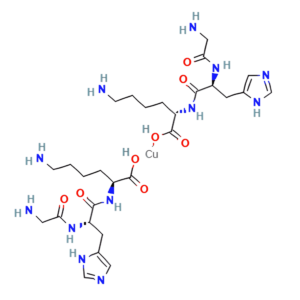
GHK-Cu: Investigational Background and Current Research
GHK-Cu is a copper-peptide complex associated with the tripeptide glycyl-L-histidyl-L-lysine (GHK). In scientific and commercial sources, related naming includes copper tripeptide, copper tripeptide-1, and prezatide copper. Because naming varies across cosmetic, research, and pharmaceutical-development settings, study-facing and procurement-facing content should define the material precisely and use the same naming convention consistently across the page and supporting documents.
What Preclinical Literature Suggests
Preclinical and mechanistic literature suggests that GHK-Cu may influence biological processes relevant to tissue repair and extracellular matrix remodeling. This supports biologic plausibility, but it should still be described as preclinical support, not proof of clinical efficacy.
What Current Human Evidence Indicates
The current human evidence base for GHK-Cu remains narrower than many consumer-facing pages imply. Existing human data support translational interest, but they do not establish definitive therapeutic proof.
A Journal of Investigative Dermatology study reported that the GHK-Cu complex modulated expression of glycosaminoglycans and small proteoglycans in wounds, with associated effects on wound tissue production and type I collagen. That finding helps explain continued research interest in tissue-repair and extracellular matrix contexts.
Broader reviews summarize hypotheses around collagen-related pathways, oxidative stress modulation, inflammatory signaling, and regenerative biology. These reviews help explain why GHK-Cu continues to attract translational interest in skin, wound, and tissue-repair settings.
Small topical and cosmetic studies have reported improvements in appearance-related skin measures such as thickness, density, elasticity, or fine lines, but these findings are not equivalent to robust therapeutic wound-healing trials. A 2024 review specifically notes a relative lack of strong clinical evidence in topical applications.
A randomized study evaluating topical copper tripeptide complex after carbon dioxide laser resurfacing did not show statistically significant improvement versus control on objective measures, although patient satisfaction was higher in the GHK-Cu group.
Clinical Development and Study Planning Considerations
A searcher looking for GHK-Cu-related development context often lands in a noisy search environment dominated by skincare pages, research-use-only listings, or direct-purchase pages. True B2B peptide development pages usually use different language, including custom peptide synthesis, peptide API manufacturing, clinical development, analytical characterization, scale-up, trial material supply, CDMO, and CMO.
The key distinction is that research-grade GHK-Cu and clinical-trial peptide supply should be clearly separated in positioning, documentation expectations, and program discussion.
Research-Grade Language Often Signals
- Catalog-style listings
- Research-use-only positioning
- Limited procurement context
- Low emphasis on trial-specific documentation
Clinical-Trial Supply Language Typically Signals
- Protocol-aware sourcing
- Study-stage planning
- Analytical characterization
- Documentation expectations
- Packaging and labeling needs
- Sponsor / CRO workflow discussion
Technical Questions Teams Should Align Before Starting a Program Discussion
Hudson Biotech Positioning
Hudson Biotech can be positioned as a U.S.-based peptide manufacturing partner focused on custom peptide synthesis and clinical trial supply for investigational programs. Based on the company-provided context, the target audience includes biotech sponsors, CROs, hospitals, research institutions, procurement teams, and principal investigators.
The most effective positioning emphasizes sponsor-side support—facilitating technical sourcing discussions, aligning with study requirements, and supporting procurement-driven workflows. This approach avoids retail-oriented peptide language and instead highlights clinical-trial relevance, structured planning, and clear differentiation from supplement or consumer-focused positioning.
FAQ:
What is GHK-Cu?
GHK-Cu is a copper–peptide complex associated with the tripeptide glycyl-L-histidyl-L-lysine. It is also referred to in scientific and commercial contexts as copper tripeptide, copper tripeptide-1, or prezatide copper. In the context of NCT07437586, it is being investigated as a topical gel.
What is NCT07437586 evaluating?
NCT07437586 is a Phase 2 interventional study assessing whether topical GHK-Cu gel can safely accelerate the healing of small, standardized acute skin wounds in healthy adults, compared with a matching vehicle gel. The study uses a randomized, double-blind, vehicle-controlled, split-wound design, with an estimated enrollment of 60 participants, once-daily dosing for 14 days, and follow-up assessments including wound healing and scar quality.
Is GHK-Cu investigational?
es. In this context, GHK-Cu is presented as an investigational peptide. The official record classifies it as a Phase 2 study intervention, and current literature supports continued investigation rather than definitive therapeutic claims.
Is GHK-Cu the same as copper tripeptide-1?
hese terms are commonly used within the same or closely related naming context for GHK-Cu. However, naming conventions may vary across cosmetic, research, and pharmaceutical development settings, so the exact material and specifications should be clearly defined in study and sourcing documentation.
What is the difference between research-grade GHK-Cu and clinical trial peptide supply?
earch results frequently present GHK-Cu as research-use-only or catalog material. In contrast, clinical trial peptide suppliers focus on custom synthesis, analytical characterization, scale-up, regulatory documentation, and structured study supply planning.
What should sponsors prepare before starting a technical discussion?
ponsors should be prepared to define the exact material identity, intended study phase, dosage form, comparator strategy, analytical requirements, documentation needs, stability expectations, packaging and labeling considerations, and target timelines. These elements are essential for an effective study planning discussion.
Short Compliance Disclaimer
GHK-Cu is presented here as an investigational peptide. This content is intended for biotechnology, clinical research, and procurement audiences only. It does not constitute medical advice, is not designed for consumer use, and does not provide guidance for self-administration. All Hudson Biotech–specific manufacturing, quality, documentation, and regulatory claims should be verified against current company records prior to publication.