Hudson BioTech

HUDSON

BIOTECH

TB-500: Research Background, Clinical Context, and What the NCT07487363

Source-grounded trial analysis and peptide-supply context for sponsors, CROs, hospitals, investigators, and research procurement teams.

The official ClinicalTrials.gov entry for NCT07487363 is currently identified as a fictional example. It is intended for educational purposes only and should not be referenced as evidence of an active or recruiting clinical trial.

Why

This Page Exists??

If you arrived here looking for a real trial page for TB-500, the first thing to know is that NCT07487363 is not a conventional live study listing. The official ClinicalTrials.gov record carries sponsor, location, phase, and intervention fields that look like a standard trial entry, but its own brief summary says it is a fictional study and an example of a ClinicalTrials.gov-style record. ClinicalTrials.gov also explains that example studies are fictional records created for training and illustration. In practical terms, this page should be read as a guide to the science, the registry context, and the peptide-development questions that matter, not as a recruiting notice.

That distinction matters for sponsors, CROs, academic investigators, and procurement teams. In peptide development, trust is built by careful sourcing, precise language, and a clear separation between exploratory biology, example registry content, and verified clinical evidence.

What TB-500 Is

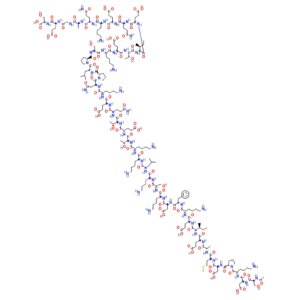
TB-500 is generally described as the N-terminal acetylated 17–23 fragment of thymosin beta 4, often represented as N-Ac-LKKTETQ, rather than the full-length endogenous thymosin beta 4 peptide. FDA’s GSRS and UNII resources include a TB-500 substance record, while also stating that UNII availability does not imply regulatory review or approval. WADA materials also identify thymosin-beta 4 and its derivatives, including TB-500, on the Prohibited List for sport.

Full-length thymosin beta 4 is a highly conserved 43-amino-acid peptide and a major actin-sequestering molecule that has been studied in wound healing, angiogenesis, inflammation, and tissue-repair biology. That broader thymosin beta 4 literature helps explain why fragment-based products like TB-500 attract attention. But it does not automatically establish that a short fragment has the same pharmacology, safety profile, or clinical evidence base as the parent peptide.

FDA has also taken a cautious stance toward thymosin beta-4 fragment (LKKTETQ) in compounding. On its safety-risks page for certain bulk substances, FDA notes concerns including immunogenicity, aggregation, peptide-related impurities, and the absence of identified human exposure data for compounded drug products containing the fragment.

tb 500 (1) photoroom

What the Official NCT07487363 Entry Says Right Now

As of April 8, 2026, the ClinicalTrials.gov entry lists the study titled “TB-500 (Thymosin Beta 4 17–23 Fragment) for Cardiovascular Biomarkers in Stable ASCVD (TBRIDGE-CV),” with Hudson Biotech named as both the sponsor and responsible party. The record presents the trial as a standard interventional study, classified as Phase 1/2, targeting atherosclerotic cardiovascular diseases and endothelial dysfunction. It identifies a study site at Peking University Shenzhen Hospital in Shenzhen, Guangdong, China, and notes that participants are randomized in a 3:1 ratio to receive either TB-500 or a matching placebo.

research

Current Research and Clinical Context

Across the sources reviewed for this page, literature specifically addressing TB-500 was largely centered on analytical methods, metabolism, and anti-doping research. This includes studies identifying the acetylated fragment linked to TB-500, investigations into its metabolites, and efforts to track the peptide within detection workflows. The referenced PDF also highlights a 2023 study reporting misbranded and adulterated products marketed online as TB-500 and TB-1000, emphasizing the distinction between gray-market materials and properly characterized, development-grade supplies.

In contrast, the identified human clinical studies involve full-length or recombinant thymosin beta 4 rather than TB-500 itself. These include a randomized, placebo-controlled study in healthy volunteers using synthetic Tβ4, Phase 2 trials in dry eye disease, Phase 2 data in venous ulcers, and a recent randomized study of recombinant human thymosin beta 4 in STEMI. While these findings provide useful scientific context, they should not be interpreted as direct clinical evidence for TB-500. Fragment peptides, recombinant proteins, and formulation-specific products are distinct entities and are not interchangeable from regulatory, pharmacokinetic (PK), or chemistry, manufacturing, and controls (CMC) perspectives.

For B2B readers, that nuance affects study-design assumptions, impurity controls, formulation strategy, and the way evidence should be described to ethics committees, sponsors, and procurement groups.

Why Sponsor and Manufacturer Credibility Matter in Peptide Clinical Research

For peptide development programs, credibility is rooted in technical rigor rather than promotion. ICH Q7 outlines Good Manufacturing Practice (GMP) requirements for active pharmaceutical ingredient (API) production, with accompanying Q&A guidance that specifically addresses materials used in both preclinical and clinical settings. Reviews of peptide therapeutics consistently note that sequence-related impurities and other peptide variants are common, requiring thorough characterization, control, and documentation. More recent studies on synthetic peptide drugs further stress the need to assess immunogenicity risks, particularly when impurities or manufacturing differences may alter the product’s profile.

This becomes particularly critical in areas where market hype can outpace supporting documentation. A credible peptide supplier should be equipped to provide transparent, well-supported information on identity, purity, related impurities, stability, batch release, change control, and the full documentation package required for quality and regulatory evaluation. Regulatory caution—such as the FDA’s position on thymosin beta-4 fragments in compounding—illustrates why thorough peptide characterization and strict impurity control are essential.

?

How Hudson Biotech Supports Peptide Clinical Programs

At Hudson Biotech, the strongest positioning is the most specific one. For this page, that means saying clearly what is verified, and marking the rest for documentation before publication. The PDF says the service pillars below belong on the live site only where Hudson can substantiate them with facility details, quality records, analytical capabilities, and approved case examples:

[CLIENT TO VERIFY]

GMP or phase-appropriate peptide API manufacturing for research and clinical programs

[CLIENT TO VERIFY]

Analytical method development, identity confirmation, impurity profiling, and batch release testing

[CLIENT TO VERIFY]

Stability studies, reference standards, and documentation support

[CLIENT TO VERIFY]

Clinical-trial supply planning, packaging and label coordination, and tech transfer support

For sponsors and procurement teams, the right first conversation is usually a technical one: What is the peptide sequence? What are the key impurity risks? What release tests are fit for purpose? What stability assumptions are reasonable? What documentation will quality teams or sites expect before material is released?

FAQ:

Is NCT07487363 a live recruiting clinical trial?

The official record does include recruiting-style metadata, but its summary explicitly states that it is a fictional, example-only ClinicalTrials.gov-style entry. Supporting materials from ClinicalTrials.gov further confirm that example studies are intended to be fictional and used for illustrative purposes.

This is because example records can still be structured to resemble real study entries. In this case, the visible fields—such as sponsor, site, phase, conditions, and placebo-controlled design—mirror those of a typical trial, but the summary text takes precedence by clearly stating that the record is fictional and intended for illustrative purposes only.

Not exactly. TB-500 is typically described as a short, acetylated peptide fragment associated with thymosin beta 4, whereas full-length thymosin beta 4 is a 43–amino acid endogenous peptide with a much broader body of biological research supporting it.

Correct. FDA’s GSRS (Global Substance Registration System) and UNII (Unique Ingredient Identifier) resources explicitly note that the assignment or availability of a UNII does not indicate regulatory review, approval, or endorsement of a substance.

Across the sources reviewed for this page, the TB-500-specific literature identified was primarily focused on analytical characterization, metabolic studies, and anti-doping research. In contrast, the clinical studies located in humans involved full-length or recombinant thymosin beta 4 rather than TB-500 itself

This is because peptide medicines may contain sequence-related impurities and other product- or process-related variants that can affect comparability and, in some cases, immunogenicity. ICH Q7 guidance and the broader peptide literature consistently emphasize that robust GMP systems, thorough impurity characterization, and complete documentation are central to ensuring development and manufacturing quality.

The World Anti-Doping Agency (WADA) includes thymosin beta-4 and its derivatives, such as TB-500, on its Prohibited List. WADA reference materials also characterize TB-500 as the peptide fragment N-Ac-LKKTETQ.

This page is intended as an educational, source-based overview for research and development audiences. It does not constitute medical or legal advice, nor does it replace protocol-specific regulatory review.

Scroll to Top